
“I waited four days at the airport in Yakutsk for my airplane to Magadan to take off. Snowstorms raged over Kolyma; everything was covered over, buried under. This is what travelling around Siberia is like. Of course, it is a dreadful sense of idleness, an unbearable tedium, to sit motionless like this, in a state of mental numbness, not really doing anything. But on the other hand, don’t millions and millions of people the world over pass the time in such a passive way?”
Ryszard Kapuscinski, Imperium (1994)
A call for relevance
It’s a fact of life that even the most exciting of weeks can contain some very hum drum periods, when, whatever we engage in, seems quite a come down from all the enlightenment just experienced.
Travel is no exception to this rule. You may be journeying in search of adventure, but make no mistake, however fulfilling particular events, places or acquaintances were, there will be periods when you have moved on from that, with substantial stretches ahead of you until the next noteworthy occurrence.
So, in writing up my travel tales, I aim to strip out the dullness. Otherwise, there would be quite a few chapters on the theme of, ‘My passage through an average country and its ordinary people’. The important bit though is that in between melancholic spells, there are always interesting episodes worth committing to paper, which transcend any routineness.
To illustrate this, when I trundled up from Winnipeg to Churchill, on the fringes of the Arctic circle, the passage through hundreds of miles of fir tree forests and tundra was at first breath-taking, but after an hour or so of counting trees and with no one else to talk to – there were only eight other passengers on the entire train and one stop – it felt simultaneously beautiful and monotonous. Counting these trees soon took on the form of an alternative Chinese water torture. I became very agitated and found myself mentally climbing up the carriage walls.
Two days later at journey’s end, on dismounting at Churchill, my head was in a swirl. It felt like I needed some serious counselling.
I reflected in my jottings that it had been a different kind of journey, a bit of an endurance test. More importantly though, following my four day return journey and the days in Churchill, I had stumbled upon a range of stories that amounted to a sizeable alternative travel writing tale.
I was always confident, riding through those forests, that things would get better. Regardless of whether they had or hadn’t, I certainly would not have waisted my time with an extended travel essay about the hours spent zipping past all those trees and tundra. And yet, so much that now fills travel literature websites is concerned with focussing on the mundane – the five best coffee houses in Bristol, the ten best book shops in Cambridgeshire, or ‘Our weekend in London’ travel journal – It is tourist information masquerading as travel writing.
It reminds me of a mock blue English Tourist Board information plaque that is pinned to the wall of a regency terraced house close to our own abode. It reads, ‘On 5th September 1782 absolutely nothing of any note happened here.’ And even the cat who sits on their step looks bored. But still, I am sure there are days in 2021, when for this household things really do happen, that on balance make it all worthwhile, and possibly writing about.
So, if something notable does happen on a journey you make, something that felt like it was quite out of the ordinary to your daily existence – persons met, the history and landscape uncovered, then maybe it forms part of a traveller’s tale. If there really is a tale to tell, let’s hear it. Otherwise, it would be more appropriately aligned elsewhere.
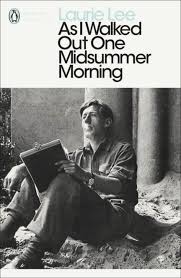
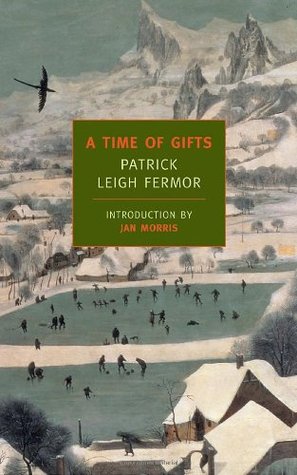
The classic travel literature texts of Laurie Evans and Patrick Leigh Fermor, to name a couple, relate to periods of their lives when they just set out on different mornings in the 1930s, with the aim of just traversing the earth until they had had enough. As young men who hadn’t even turned twenty, they got as far as Andalucía and Eastern Europe respectively, with the clouds of war gathering around them. I am sure that many of their days on foot felt rather ordinary – at mundane periods, they might have wondered why they even bothered. But at the end of it all, they only chose to include in their books, the bits that were worth telling, which were still numerous.
They wouldn’t have seen the point, on their return, in publicising a short list of places to go for the tastiest paella or bratwurst. They found it more important to highlight their experience of deep prejudice and the pending doom they were a witness to, not to mention assignations with the publican’s daughters at the hostelries where they stayed and other intriguing snippets. Perhaps there is still time to keep it this way.
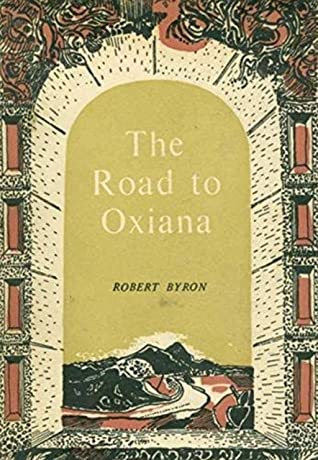
Similarly, Robert Byron around the same period, had a more comfortable passage to Afghanistan via boat and (even for that time) classic car. His subsequent recanting of his trip, The Road to Oxiana, has long been heralded as a literary travel writing classic, majoring as it did on detailed descriptions of Afghani religious buildings and its landscape. Whilst it has been held in high esteem by quite a few Oxbridge graduates, who then went on to cover and write about similar journeys themselves, I have never been able to get past the first fifty pages – which is possibly why I spent more of my younger years mowing the lawn than trekking through the Hindu Kush. What I am sure about though, is that Byron probably spent a lot of time staring out of his glassless window in Kabul onto a featureless sandy landscape, thinking, ‘What the hell are we going to do next? Please, not another mosque, just yet!’ And then finally, after a further day of dull restless ruminating he would come up with the idea of hiring a donkey that would take him to a far-flung ridge, on the edge of which he would enthral us further with the dimensions and trajectories of another ecclesiastical monument.
Well, I shouldn’t jest about this much revered book. After all, even if you wanted to retrace Robert’s steps, legally entering Afghanistan might be a problem these days, and then the chances are that all the buildings he surveyed, which probably at one point had international preservation orders slapped on them, have since been hacked down in crass acts of cultural destruction. He finished his trip, and wrote the book, but unfortunately, not long after, and before he was able to appreciate the many plaudits that were coming his way, he lost his life on board a merchant ship that was torpedoed by a U-boat. So, God bless him, for lighting the way for so many literary travel writers, not least by only writing about episodes that to many were noteworthy and leaving out all the uninspiring days. Fortunately, he did not feel a need to shape his content around the top ten coffee houses and bookshops of Kabul, and other mundane tourist information stuff. You see, he was a travel writer, not a tourist information guide.
Since, these classic texts, travel writing as a genre has had its ups and downs over the decades, in the book shops and within travel writing websites. Sometimes feeling like it was in the throes of getting pushed out of existence. And yet it needn’t be like this. There is still a strong role for it in shaping our insights into different parts of our lands, their peoples and history, often through the recounting of anecdotes, retelling experiences, where something did happen.
Bringing it all together
A song whose structure could act as a template for the retelling of a travel journey is Bob Dylan’s, ‘A hard rain’s a gonna’ fall.’ There must be many others, but this is one with which I am familiar. Indulge me. Released in 1963 by the 23-year-old singer-song writer, it is set against the backdrop of an environment already ravaged by man and of pending nuclear devastation. A young man is sent on his way one morning to find out what is happening in the world.
On his return from an epic life changing journey, he is asked a series of questions, maybe by his parents, with his reply to each question forming a verse. And so:
‘Oh where have you been, my blue-eyed son?’……
‘And what did you see my blue- eyed son?’ …
‘And what did you hear my blue-eyed son
‘And who did you meet my blue-eyed son?
‘And what’ll you do now, my blue-eyed son?’
His reply to the last question starts, ‘I’m going back out before the rain starts a fallin’ ; I’ll walk through the depths of the deepest dark forests; Where the people are many and their hands are all empty; Where the pellets of poison are flooding their waters……..’
Well, that was telling it straight. But I digress.
I am certain, that if the blue-eyed son in question had returned from his travel mission and the sum of his recall was that he had discovered five coffee houses, three bookshops, two ice cream parlours and a pleasant three-star hotel, his parents would have sent him out again, and told him to do better. Please come back, they would have ordered, with something harder hitting and relevant to our lives – even if it’s just a tale of the lives of those ordinary people, wherever they live, who we love and care about.
And that’s what we need to do with our writing.
A call for localness
Within the genre of travel writing, there are a subset of genres, including for example, travelling across regions in the journalistic unearthing of historical issues. A travel book that I would be particularly interested to read, if one has ever been wrote, is one that tells of a journey across 1930s Germany during the rise and rise of the Nazis – a first-hand witness account of walking through villages, towns and cities, of the extent to which people readily bought into the lie, were forced to accept it or even resisted it. A fly on the wall.
This would have been a courageous and extensive journey. However, for literary travel tales to hit the mark, they can also relate to shorter trips far closer to home. Don’t forget the history, sights, and people from your own neck of the woods.
It may be that the intensity of anecdotes to recount may be greater when traversing a short hometown stretch, if it’s on the right day, then a particularly long walk in, say, the Andes if it’s on the wrong day.
Distance wise, there may have been scope for my mother writing one of the shortest travel books ever penned.
I remember her tale of going up ’the street’ in her Lancashire hometown as a thirteen-year-old girl in June 1944. Half a mile along the way she hears on someone’s radio set that the Normandy invasion had commenced. She realised that this wasn’t just your average piece of daily news, even for war time. So, she turned around and made her way quickly back home to impart this information to her large family. On the way, she was probably imagining all the kudos that telling of the invasion would bring her. I imagine her getting held up several times, as she stops to excitedly convey the information to those who she passes. Most of them she knows. Others may have been complete strangers. What I do know, is that on arriving back home and spluttering out the news, no one believed that she had got it right.
And now, in the last few days, aged ninety she has quite nonchalantly related another story to me from five years before Normandy. Another ’war walk’ along the same stretch of road. It is 3rd September 1939. Her family has got wind of gossip that Prime Minister Neville Chamberlain is about to make a historic speech. The household does have in its possession a wireless radio set but is unable to tune in, as they cannot afford batteries. Instead, my eight-year-old mother gets despatched to go bang on her Auntie Nellie’s door. Auntie Nellie, who does indeed have a radio set, and batteries to boot.
I imagine her skipping her way back with this monumental piece of information, maybe repeating over and over in her head parts of Chamberlain’s speech, wondering, as she did, if parts of it had now taken on a different emphasis in her mind.
Well, I don’t know if she took a notebook, but I imagine the pressure to get it right must have been considerable.
Oh, the questions there must have been on her returning before she could even have a moment to get her breath back and contemplate.
‘But what did the Prime Minister say?’
‘Well just give me a moment, while I try to remember.’
‘Did he mention this or that?’
‘But no one asked me to listen out for those things!’
‘Ok. But most importantly, has war been declared, or hasn’t it?’
‘Let me think. It was his accent you see. I think there is going to be a war, almost certainly, but sometimes, I just couldn’t understand what all those words meant.’
Maybe between 1939 and 1944, there were several other ‘war walks’ she made, gathering and dispatching intelligence. I will have to ask her.
My, if she had set out one morning along her long street and heard on a distant Wireless set, news of the German surrender. And what might the adults who she met on the way back have said? There may have been a few who had family members missing in action, and for whom this news gave a modicum of hope.
And a few months later, perhaps, on another morning she hears about the dropping of a giant bomb on Japan. There may have been people who she spoke to who had relatives in captivity in the Far-East, who were quite positive about the discovery of nuclear fusion
‘Yes, but Sis, what’s so special about this bomb?’
‘Well, they said it was very big and did a lot of damage.’
‘Yes, but aren’t they all big and meant to do a lot of damage? So, is the news no different then?’ .
So, all these encounters that might have happened could have provided enough material for some kind of historical travel book. But I merely use this as an illustration of one way in which travel writing, particularly at a local level, can step outside of the box – it does not have to be about mammoth trails. Sometimes, with a bit of inventiveness, it can be measured in miles.
Is Travel Writing Dead?
Certainly, the material for travel writing these days is not limited to those swash buckling exploits which in Victorian and Edwardian times would have found themselves up before the Royal Geographic Society for approval and funding. The scope for ingenuity has changed considerably.
Granta, the magazine of new writing, in a 2017 edition, published submissions that it had requested from thirteen reputable authors under the heading, ‘Is Travel Writing Dead?’ Reading through these, there did not seem to be a lot of agreement as to what fell within the discipline of travel writing; except perhaps that the notion of just exploring some place ‘because it is there’; of doing it for the Empire, is an outdated concept. Ian Jack in his submission contended it would be enlightening to read modern accounts of travels in the Western world by writers from the East; “if nothing else, we might then know how it feels to be ironized, condescended to and found morally wanting.” Many of the life defining journeys that are still waiting to be described have been taken out of necessity, rather than as a challenge. As Lindsey Hilsum recognised in her submission, “We need a new genre of travel writing, gleaned from the stories refugees and migrants tell housing officials, charity centres, immigration officers, health workers and school admission staff.”
Clearly, travel writing hasn’t died, rather its scope has diversified immensely.
Damian Rainford, 2022
Back Home to http://theancienthighway.com
References:
As I walked out one midsummer’s morning, Laurie Lee (1977)
In a time of gifts, Patrick Leigh Fermor (1968)
The road to Oxiana, Robert Byron (1937)
Granta – The magazine of new writing. Edition 138, Journeys (2017)
(Header image: Author’s pic. Women of Jaipur, India, chant mantras outside a Hindu temple)
