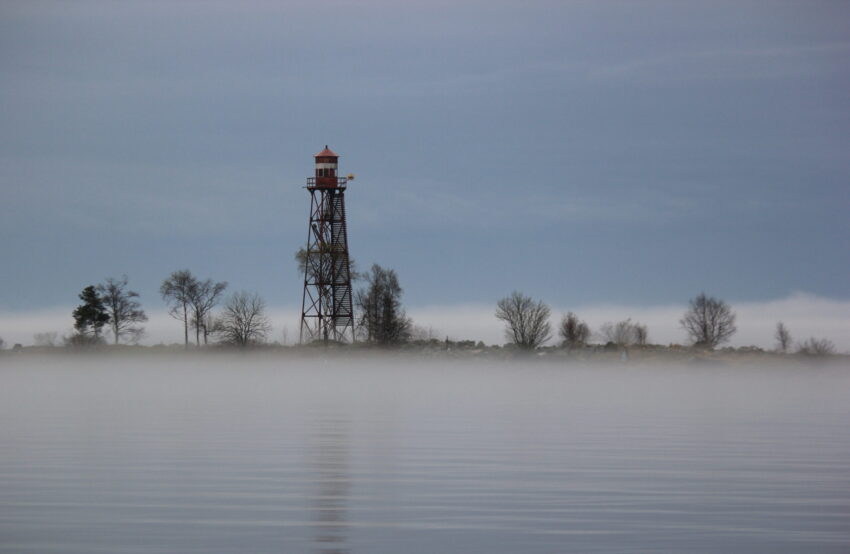
Modern Classics – Travel literature book review – Imperium, Ryszard Kapuscinski, 1993
“Siberia, in its sinister cruel form, is a freezing icy place, plus dictatorship. In many states there exist icy territories, lands that for the greater part of the year are frozen over, dead. Such for instance, are vast stretches of Canada. Or take Greenland or Alaska. And yet it doesn’t occur to anyone to frighten children with: “Wash your hands, or they’ll send you to Canada, or, “Play nicely with that little girl, or they’ll deport you to America. In these countries, there is quite simply no dictatorship. Nobody puts anyone in chains. Nobody imprisons anyone in camps, dispatches him to work in hellish frosts, to a certain death.” (Imperium, Ryszard Kapuscinski)
What’s the book about?
Kapuscinski is a child in 1939, when the Soviets invade eastern Poland. On various occasions, he hides with friends in bushes by railway sidings, observing the deportation of families. His school class size shrinks daily, and then one morning, his teacher is amongst the disappeared. Later, by the side of the tracks, Kapuscinski hears his teacher calling him through the slats of a container wagon. He has been impounded, ready for deportation. It is the last time the young boy sees him.
In the decades that follow, Kapuscinski makes several journeys across the USSR, covering periods from despotic rule, through to when society under Perestroika appeared to be opening up, and then onwards to just a few years later, the point at which the Union itself dissolves.
Kapuscinski was a Polish literary treasure. His wry anecdotes and observations of attempts by the Kremlin to model ‘HomoSovieticus’ into something he was never really meant to be, are brought to life in this publication. Part Cold War travel book, part rediscovery of the excesses of totalitarianism, the questions he raises remain relevant.
(Read on for a fuller review)
An Entangled Paranoia
The Soviet invasion in 1939 of eastern Poland brings immediate deportation for many. For those like Kapuscinski and his family, who manage to cling on, Russification becomes a part of life in their home town of Pinsk, and to be called ‘bourgeois’ is now an awful term of abuse.
We emerge swiftly from Kapuscinski’s childhood, and travel with him from Peking to Moscow. It is 1958. The entire trans-Siberian line is cleansed of anything that could remotely catch anyone’s attention, least of all a budding spy, and so what would a traveller like him find to write or ask about, unless of course, he was a spy. These are the vibes he picks up from officials and passengers.
God forbid, that at any of the regular custom’s checks, he should be discovered with seditious western literature. At the trackside inspections of luggage, he could place a suspect English publication on top of a suitcase of cocaine, and officials would most likely leap onto the book, and ignore the white powder. This is the state of paranoia he describes.
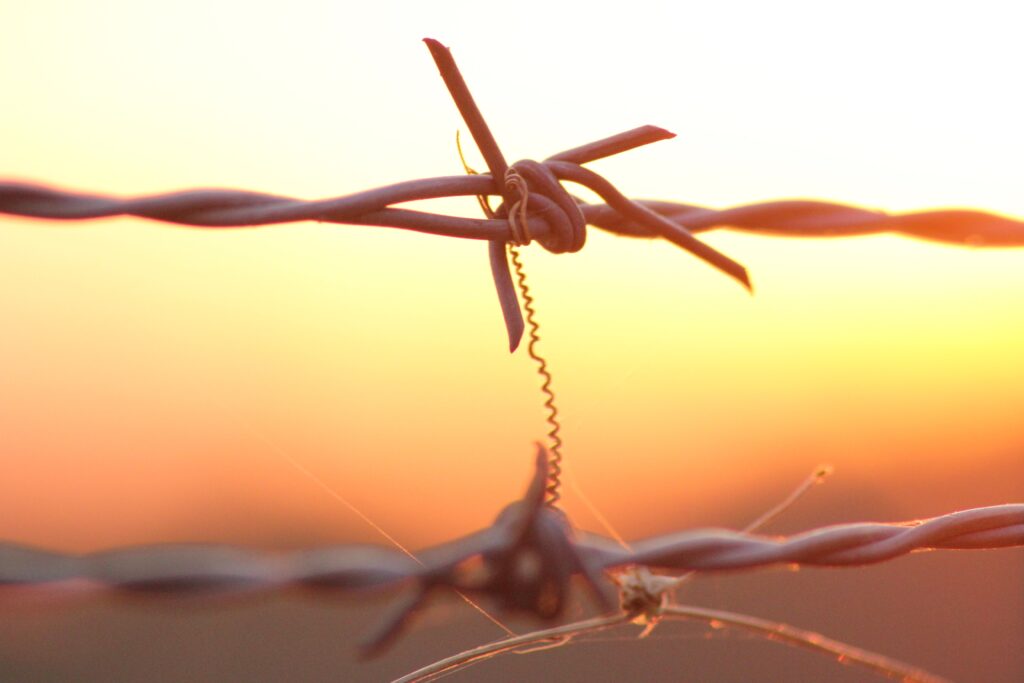
Years later, all the barbed wire Kapuscinski has been forced to view on his travels finally get to him. This takes the form of one of his literary rants – which in themselves are a great treat. He observes that a significant proportion of the Soviet metallurgical industry is devoted to producing such entanglement. But this is not just restricted to borders. There are thousands more kilometres that fence in hundreds of camps that fill the Gulag archipelago, as well as numerous prisons that fill the empire. Not to mention, barracks, artillery and atomic ranges. If these were multiplied by the number of years the Soviet Union has been in existence, then it is easy to see why in the shops of Smolensk or Omsk, one cannot buy something as basic as a hoe or a hammer.
The Obliteration of God
On his Moscow wanderings, Kapuscinski finds himself at the former site of the Temple of Christ the Saviour, a major Russian architectural gem. Stalin ordered demolition work to commence here in 1931. Upon its site, to rival any other building in the world, was to be the Palace of the Soviets of Moscow.
There was no shortage of alternative open spaces, where this could have been built, but the great leader wished to see God replaced with a tribute to his own existence and he maintained a very close interest in his project’s progress.
A huge foundation pit was prepared. Tons of precious stones, icons and the like were removed, never to be seen again. But then running alongside this was the slight added pressure of starving ten million Ukrainians, followed by purges and show trials, not to mention a world war. Could they really expect him to personally manage everything? And just when things couldn’t get any more fraught, there was the added complication of death, namely his own.
Subsequent leaders couldn’t muster up the same enthusiasm. Instead, the massive foundation pit just gathered water across the decades. This eventually, providing an idea for an alternative use, and Kapuscinski peruses it through a rising mass of steam one cold morning, watching the bonding of semi naked men, for it is now a giant outdoor heated swimming pool.
The Gulags
Beyond the arctic circle, there are dozens of camps in the vicinity of Vorkuta, Komi, that sprang up in response to the discovery of coal deposits.
Spending time in this location was doubly perilous for hunters, travellers and geologists. The reward for the local populace for delivering an escaped prisoner’s hand to the NKVD, identified through fingerprints, was a sack of flour. Mistaken identities were not unusual.
Many prisoners stayed on after the camp closures, after all this had been their home for decades, and where else to go?
Mining is still an industry here, and on the sites of former camps, workers continue to make a living. In the spirit of Perestroika, the miners are allowed to strike over the need for better working conditions.
Kapuscinski attends a strike meeting, at which mine directors are present. With irony, the discussions illustrate a newly created divide between the rulers (owners of the means of production) and the ruled.
In Siberia, Kapuscinski stands on the mouth of the bay of Nogayev. Here many millions were disgorged upon a rocky shoreline and marched in columns to gulags. Of those who had survived the journey so far, three million perished or were executed.
Kapuscinski reflects on the view, “Rusty carcasses of ships, rotting watchtowers, deep holes from which some kind of ore was once extracted. A dismal, lifeless emptiness. Not a soul anywhere, for the exhausted columns have already passed and vanished in the cold eternal fog.”
His Magadan hotel is on a street that was previously named after Berzin, the original Director of the mines network around which camps were based. But Stalin had him shot for underperformance, so the street had to be renamed. During his residency, Berzin had named Magadan’s Park of Culture after his regional NKVD chief, Yagoda. But then Stalin also had Yagoda shot, so a further renaming of the park was necessary. A successor was appointed, but he too had to bite the bullet. These days, the streets and parks have a stronger sense of permanence being named after garages, post offices, stations and the like.
Kapuscinski saunters around enclosed snow-covered Magadan streets, never sure if the elderly people he literally bumps into are former executioners or their potential victims. In reality, they could be both, as it was quite common for camp overseers, to then find themselves as prisoners, and then upon the dissolution of camps, for them to go seeking retribution for the barbarity they had to suffer, when the boot was on the other foot.
State of the Union
Kapuscinski wrestles with his demons, reflecting on the fanciful notion of a Soviet Union, and of the brutal measures used to maintain some sort of cohesiveness across it.
He asks whether an imperium that was created through hundreds of years of conquest and annexation could ever have become democratic under Perestroika.
Indeed, at the point of dissolution of the USSR, several dozen non-Russian nations and tribes still lived in the Russian confederation. Kapuscinski observes them demonstrating more and more to Moscow about the separateness of their interests
This has been brought on in no small part by a century long history of unceasing migrations, displacements and deportations to Gulags, interspersed with wars and famine. A deliberate outcome of this was to create the uprooted man, wrenched from his culture and environment and therefore more defenceless and obedient to the dictates of the regime.
However, today thousands are still camped out in airports, train stations, barracks, with no sense of belonging to any kind of union. Nomadism is still present and alive here, either side of redefined Russian borders.
By contrast, in an Irkutsk church, Kapuscinski attends a fervent nationalist service, where amidst pageant like fanfares, an idealogue rants about Russia’s greatness having awakened the hatred of her enemies, with them lying in wait for her ruin; desiring her extermination. Here, the October revolution is viewed as an international conspiracy and only a return to the time of the Czar can bring salvation.
An Uneasy Future
And so, as Kapuscinski sees it, anybody and everybody is arming themselves and sharpening his sword, with it being easier across regions to get a pistol or grenade than a shirt.
Thus, here we are then… and here we are now – a journey across the USSR, most of it made, when it quite possibly felt like the Cold War and government with an iron fist was over. Lessons from history indeed.
(Ryszard Kapuscinski, journalist and author, reported on a multitude of coups and revolutions for the Polish Press Agency over a quarter of a century, but was fired in 1981 for his pro-Solidarity views. He died in 2007 aged 74.)
(Featured pictures: Pixels Images)
Damian Rainford, 2023
