Yugoslavia travel writing; Journeys 1988 to 1989
I had come to Yugoslavia to see what history meant in flesh and blood.
Rebecca West, Black Lamb and Grey Falcon (1941).
PART 1. A BLINKERED JOURNEY
Prologue
When I set out across the Balkans in the late 1980s, I thought I was chasing borders for their own sake. Only later did I understand how naïve that was—the silence of ruined towns, the stillness of borderlands, the easy laughter in sunlit squares—beneath it lay fault lines that would soon split open.
Back then, I couldn’t see it. I was too caught up in the moment, too busy measuring how close I could get to Albania’s wire, or how many other borders I could tick off. In hindsight, those small obsessions look frivolous against what was to come.
This chapter revisits the journeys I made, acknowledging both the blindness of my younger days and the knowledge that time has since forced on me.
Albania – A Closed Country
Spring 1989 – I am in the far south of Montenegro, a few miles from the Albanian border and wanted to get up as close as possible to its sealed line, just to get a glimpse of what existed beyond, in this impenetrable country.
What would lay behind its silence? A state like this was so shut off, that in time, its own citizens might vanish behind the stories they could tell.
Just making it this far felt like an endgame in itself. A border experience to be absorbed and reflected on.
The idea had been planted days earlier by travellers – graduates in Russian —I had met on a ferry to Split. They had tried and failed to reach the border, with the region a no-go area for several miles before the barrier.
An Earthquake in Ulcinj
Still wanting to see it for myself, I caught a bus, travelling for a couple of hours through the Republic of Montenegro, heading ever closer to Albania.
The service stopped briefly on the waterfront of the town of Ulcinj. The bus emptied, but I stayed on for its final stop, in the middle of the Old Town, the Stari Grad.
The place had a very haunted feeling about it, most of it having been decimated during the 1979 earthquake that had rocked the region. It still looked like it was in its original state of devastation.
All seemed deserted. I found a broken, unsafe looking building that on further inspection was a cafe, where I was served a coffee at its sole outdoor table, which came in a cracked cup on a cracked saucer. Two monks emerged from a nearby dilapidated seat of learning and scuttled by. A man and a woman walked past with briefcases and got into a taxi. A church bell rang in the distance. A lady then emerged from a house that looked like it had had an attached property, that had fallen away during the quake.
There was some semblance of purpose about the settlement, with it feeling like a rubble strewn ghost town, where its remaining inhabitants occasionally emerged from behind the ruins, to carry on with their business.
A Broken Dream
I spent an hour waiting at the bus stop for anything that was heading further south. There was a service of sorts, according to a wrinkled, faded timetable, but one which was in abeyance, just like the Russian speaking travellers had intimated.
I was sucked in by the town’s deathly hush and assumed that, in contrast, down by the border zone, the atmosphere would be a tense and not quite as silent affair.
Would I dare get up as close as possible to the frontier, camera in my hand? Probably not.
I imagined that if I did make it there, and persuaded them to let me in, this would occur with a minimal shake or nod of the head, even the exchange of passports would be done with a slight movement.
But it’s just as well I didn’t walk or try to travel those few miles up to the crossing, for I later discovered that the formal entry point into Albania, in so far as there was one at all, lay twenty miles further inland.
By now my border dream was broken, as the return bus back up to Dubrovnik pulled up. I got on, still waiting for the Stari Grad to come to life.
As we started to make our way back up the coast, I turned round to look at how far down the road I could see in the direction of Albania.
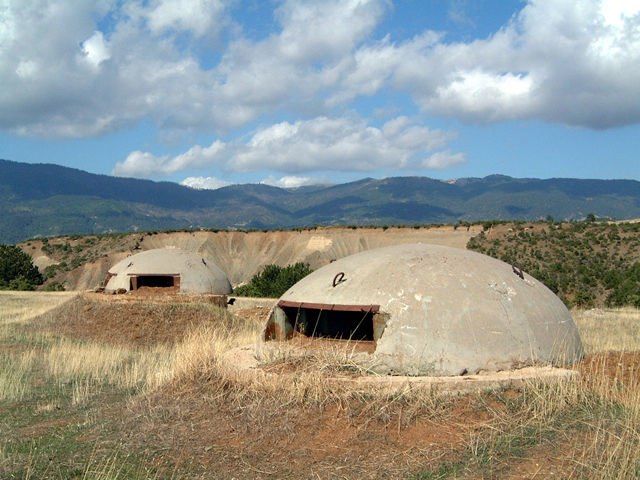
If I had made it up to the border, I was sure that I would have encountered barbed wire, and guards with binoculars in the distance. I would have spotted a range of the bunkers that had the appearance of cement-like igloos. These were strewn across the landscape, reputably enough of them for each family. In pictures I had seen, they looked like a nineteenth century solution of a feudal society to the challenges of a modern-day cold war. They were there to protect the country from its enemies, but geographically and ideologically, which side would an attack come from? Dictator Enver Hoxha died in 1985, but state paranoia, it seemed, just lived on.
At least the silent and crumbled world of Ulcinj represented a kind of border experience in miniature.
Had I reached the edge, as near as it was possible to get to Albania, I would have derived a sense of achievement from my efforts. Maybe for quite a while, through my right-here, right-now tinted lens, I would have reflected upon it in a mellow state, heartened by the illusion of arrival.
Epilogue
But in the months and years to come, I could only view my actions as purely self indulgent, oblivious to any life-threatening rumblings that were soon to rip Yugoslavia apart. Yet surely, my paradise destination wasn’t suddenly to turn into hell, without giving me some kind of notice, as I trekked through this land in a blinkered state?
And so let us step back to the previous year, in a story, that resembles a morality play about human decency.
PART 2. PARADISE- AN INEVITABLE FRACTURE?
Prologue
In the spring 1988, I started out from Istria in the far north of Yugoslavia, another contested frontier throughout time. From there I covered ground. I passed through republics, and I passed through dubious history, including walking across the tracks of a diaspora from forty years ago, whose memory was seemingly buried.
Into the Balkans
May 1988 – I spent a couple of weeks traversing that diverse federation of Yugoslav republics, once held together by Marshal Tito’s vice-like grip. Its existence was helped by a buffer of Warsaw Pact states sitting between itself and the Soviet Union and by Tito’s bold declaration of nonalignment with the Soviets.
Tito was Yugoslavia and his brand of decentralised socialism, within a mixed economy, was far ahead of Mikhail Gorbachev’s centralised reforms in the USSR.
He had departed this life nearly a decade previous. And so, was the gel still holding the republics together as well these days?
Istria – A Bargaining Counter
You might find the republic that I flew into on an atlas of the time. But Istria was a secret of sorts, often bundled with Slovenia. It was a far northern republic that was in denial, its sovereignty having shifted endlessly.
Before World War Two, there was no doubt about it, Istria was Italian. But then, in the carving up of a new Europe, this small multi-cultural region was handed over to Tito and his Partisans.
I was staying near the waterfront of Poreč, renting a room, with a mahogany theme, in the house of an elderly widow, who seemed to lie in wait for company. We had a rapport going, getting by with gesticulations and pidgin English. Each morning, she emerged from the shadows of the hallway like a stage cue
On the second day. I asked if many Croatian people lived locally. She understood and confirmed that this was the case. But then I asked if lots of Italians lived here as well. She lowered her head, turned away and dusted a sideboard with her back to me.
She didn’t lay in wait for me after that.
Pula – Despondent and Vibrant
In Pula, Istria’s main city, I spent an hour looking around its intact first-century amphitheatre, which provided a strategic view of the city, and of the port area.
Occasionally, ships departed, for international waters. This made it a border point of sorts, enough to make me want to venture on down there and poke my nose in.
I just loved port cities and their waterfronts. I always had this notion of the bigger a port, the more culturally rich its city; something about a centuries old trading history taking place against a backdrop of the forming of new international communities, who all got along just fine. My theory was full of holes, but still, I meandered over, looking for some evidence.
I found cargo ships containers and a vacant hydrofoil space for Venice, with the sea being too rough today for departures. The rain set in. I sank into a morose, despondent mood.
I was disappointed to find no signage that would give some background to Pula’s maritime history, which like that amphitheatre, must have stretched way back into a different millennium. And if, in Roman times, a port’s importance could be measured by the size of its monuments, then surely this place, Istria’s go-to city, had to have more going for it, with it having existed on the cusp of one empire or another.
I trudged to the train station. The streets were slick with rain. The air smelt faintly of diesel and salt.
Pula station – Timetables and Boyhood Nostalgia
I was not looking to buy a ticket, more to study timetables behind dusty perspex displays and to get a feel how the city connected to the rest of Yugoslavia, and international points east or west.
If I’d discovered a train leaving for Bulgaria the following morning, slicing through the Iron Curtain, would I have been tempted? Perhaps.
I rustled through the pages I had torn out from the tome that was the Thomas Cook’s International Rail Timetable, to help me with my quest. My father worked for Thomas Cooks over several decades. He used to bring the latest version of this wodge back to our house and add it to the rest of his collection.
As a child, I would watch him studying them, unsure if he was bringing work home or simply relishing the challenge of plotting the fastest route from Oslo to Vladivostok. It was an early introduction to the study of borders for me.
And do these detail rich guides still exist? Sadly, I doubt it. Surely, the advent of cheap airlines killed their magic. I could easily find out but would rather live in blissful ignorance.
However, with the aid of these pages, I clarified that trains only ran to the national cities of Ljubljana and Zagreb. Ambition checked, I folded them away and stepped back into the drizzle.
A Diaspora
But boy was I ignorant about the selective editing of Pula’s past. Years later, with access to the web, my digging unearthed the lesser-known tale, certainly to me, of the Istrian – Dalmatian Exodus, which then tinged my earlier relaxed forays into this region with a sense of guilt.
Whilst Istria prior to World War Two had a fusion of different cultures, it was still overwhelmingly, populated with Italians. Then, in 1943, Tito’s Partisans arrived, forced the Nazis out. Retribution and murder was then exacted on anyone with fascist leanings. Often, just being of Italian extract was good enough.
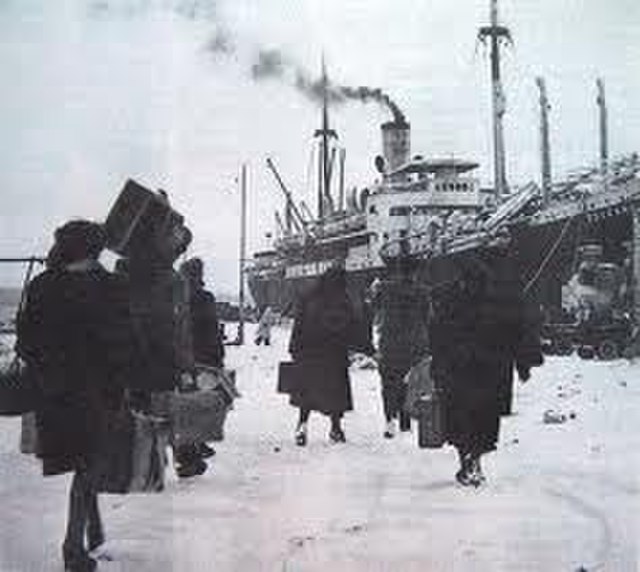
A third of a million fled their homes with whatever they could carry, trekking along roads or travelling by sea and train, towards Italy, in particular.
In Pula tens of thousands left in a single month in 1947.
Believing they would be welcomed back in their spiritual homeland, many of the refugees found themselves instead inside disease ridden camps, often viewed as a burden.
At the War’s end, Istria was confirmed as Yugoslav. The exodus continued throughout the 1950s, driven by intimidation. Alongside this, a form of ethnic cleansing was in operation, which saw an influx of Croatians into vacated Italian properties, rewriting demography house by house.
Rovinj – The Endgame
June 1988 – A few days later, I arrived by small boat in Rovinj. Its stepped terraced houses, with their red tiled roofs, and the eighteenth-century church of Saint Euphemia towering over all else, made for a striking view, as the vessel approached the harbour. Our group of passengers had sat out on the boat’s deck, lapping up the sun and drinking wine. Occasionally, naturists in their birthday suits would pass close by water-skiing. The captain, would shout, “Ladies please, no looking!” There was much mirth aboard, and this wasn’t about to dissipate, once the town’s serene skyline came into view and we tottered off the boat in our mellow state for lunch.
We were probably all unaware of how things had changed in the town’s composition in modern times. Pre-war, pushing one hundred percent of the population was ethnic Italian. Now, it was around eight percent.
For years, I had a small, framed photo of the town, viewed from its harbour. This was on display at whatever place I called home. Admiring its beauty could feel as good as going on holiday. These days. It feels more like denial than nostalgia.
The exodus here foreshadowed what was to come across Yugoslavia; a proving ground for the brutal displacements that would return half a century later, just after my own travels.
Trieste – City on the Edge
The next morning, due to rough seas, I travelled by road instead, heading for Venice, via the small Italian city of Trieste. I was retracing the path taken by many of the region’s population with their handcarts, in the immediate post-war years.
It was a melancholy few hours on the road, stripped of both mirth and menace.
Trieste was like a last outpost, as you travelled between Western and Eastern Europe; a city that had for centuries functioned as an international trading and transportation hub. But now, it just seemed to be stuck out of the way, like an appendage to Italy’s far northeastern edge.
I couldn’t quite put my finger on why Trieste felt so heavy; a once grand but now isolated city, felt like it was weeping with displacement.
Jan Morris – A Teenager in Trieste
Nearly two decades later, I would be drawn in by the writings of Jan Morris, who as a teenager, kicked off her literary career with an essay about Trieste. She penned it as a member of His Majesty’s armed forces at the War’s end, sat on a bollard by the docks, looking pensively out to sea. I have often imagined standing in her shadows, as she weaved away with her pen; a young writer sensing Europe’s wounds, before realising their full depths.
In her 1999 book Fifty Years of Europe: An Album, she further lamented, “I had arrived in Trieste across a shattered, bewildered and despondent continent, which looked as though it could never recover. We knew only the half of it then, the full horrors of the Second World War and its aftermath not having yet been revealed.”
But we weren’t finished yet. If Jan Morris had been beside me on that coach, would either of us have known the half of it, been able to envision what was still to come, how near the next murderous unravelling already was? Pretty close, as it turned out.
Trieste – a spy hub in miniature
So that was real war, but in the years after World War Two, Trieste was a spy hub. This wasn’t able to match the infamy of Berlin, but was still notorious, with flash points, targeting the new federation of Slavic states, and their Iron Curtain neighbours. A number of Western and Balkan spy networks operated across the city’s zones.
However, the degree of espionage tailed off at the turn of the eighties, with the death of Tito—yet espionage rarely retires.
In the spy years, crossing the border certainly wouldn’t have been a cinch, not like now, with them about to give our coach a cursory glance and wave us through, Venice bound.
Then we got flagged down. The family from Dublin sat next to me were subject to particular scrutiny.
The father sighed, and said, “We get this at all the time. Do they think we look like terrorists?”
It was a tense time across Europe and suspicion travelled freely.
And so yes, I could see why those border guards might be on edge, with their locus of attention these days expanding quite a few miles either side of the border and concerning more than just a bit of old school secret message passing.
Mostar and Sarajevo – Lessons from History
May 1989. I returned a year later to the Federation, entering it via Croatia. I headed further out, catching a bus, which hugged the coast for two hours, before turning inland for Mostar, in Bosnia and Herzegovina. I had crossed over republics and probably went past a sign that told us so. Its ethnic composition and landscape were certainly very different, with nearly a half of the region’s residents being Muslim. This was in stark contrast to heavily Catholicised Croatia, which now lay in our wake.
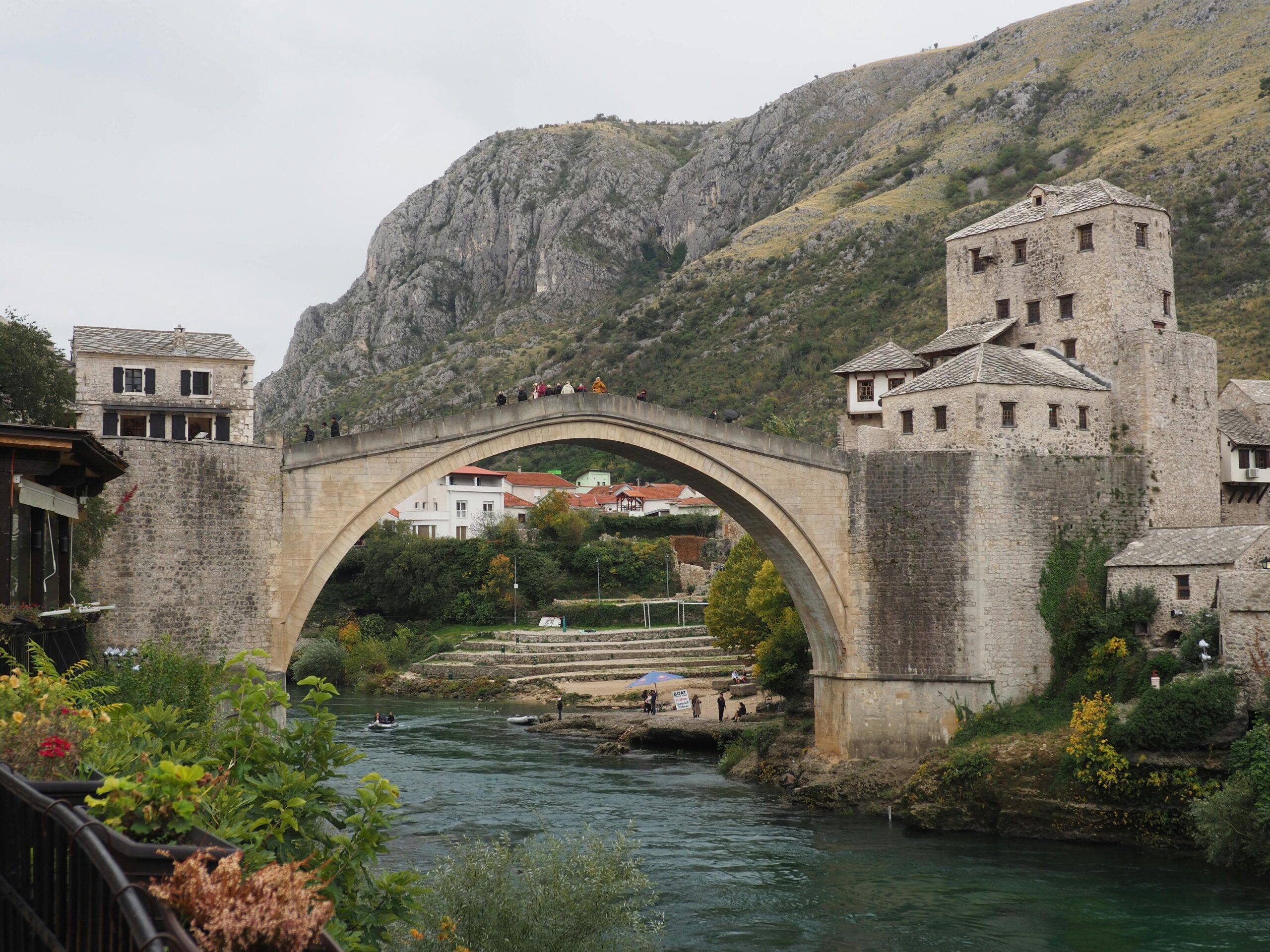
Arriving in Mostar, I fell in love with the Ottoman constructed Stari Most bridge, with all its Islamic staccato flourishes. It arched over the emerald-green river Neretva, looking like a considerable feat of sixteenth century engineering. I drank latte in its shadows, suspended between centuries.
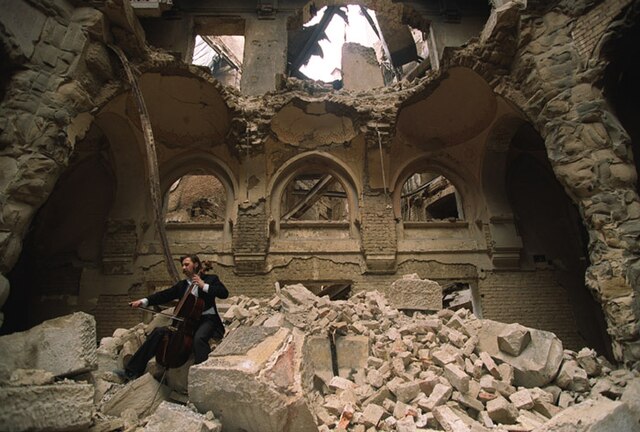
From here it was just a couple of hours to Sarajevo, a real powder keg of twentieth century European history; the city that triggered World War One. But hadn’t they talked about it being the war to end all wars? Instead, Sarajevo became the scene of the longest siege of modern warfare in the 1990s.
There is this image I still have from Mostar bus station. It was of a, possibly Muslim, mother and her three teenage sons, climbing on board the Sarajevo service. They were transporting several giant-sized bags full of produce, clothing, bedding, maybe all their earthly possessions.
During the siege, I wondered how, for better or worse, they were bearing up, and what they might have given, during its midst, to be able to make that journey, safely, in reverse? Perhaps they have made it many times since, viewing it as a right of passage.
Looking back, years later, sipping latte by the Stari Most bridge felt regrettably bourgeois. Rather, I should have powered on to Sarajevo, pounded the streets — always more revealing than caffeine in isolation.
But still, Mostar felt such a tranquil place, far removed from the violence and prejudices of World War Two that were predominant in the region.
Then, the Nazi-aligned state of Croatia included Bosnia and Herzegovina. The Croatian’s brutal secret police, the Ustasha, formed an alliance with the Nazis. They were certainly capable of teaching the Germans a thing or two about ethnic cleansing, particularly against anyone not Catholic.
Well, surely all that was from a bygone era, I thought, as I enjoyed drinking more coffee and soaked up the sun, in the shadows of the bridge. I spent time reading some Dervla Murphy travel literature and feeling very safe. I was hardly contemplating what might be simmering under the surface, across the republics. I certainly didn’t stop to consider how all border lines I would pass over that month, offered no protection, once complex, ethnic and religious prejudice gathered up the momentum of an unstoppable force.
Dubrovnik – A Utopian Vision; A False Dawn
June 1989. I had holed up in Dubrovnik, the Pearl of the Adriatic, for a few days. It was another spring morning, I walked on the tops of the walls, which ran around the perimeter of the Old Town, offering a bird’s eye view of all its red tiled roofs, ecclesiastical buildings and port. Probably the best ten Dinars I would spend in Yugoslavia.
But if Bosnia and Herzegovina had stirred my conscience, back in Croatia, Dubrovnik was lulling it to sleep, with a quaint, elegant lullaby, where history’s weight felt safely out of sight.
It felt deserted. Then a middle-aged man appeared with a younger woman. They lived in the town. We exchanged pleasantries. He then said, “Hey, this is my wife, Natasha. What do you think of her? Don’t you think she looks absolutely gorgeous?”
It was a bit of a leading question, and I didn’t want to look at her too hard, in case he suddenly accused me of leering. Besides, I’d already scrutinised them, as they came into sight, long enough to form an opinion.
“Well, is she?” he asked me again. So, I looked at Natasha, looking at me, and she smiled, maybe even giggled, before sitting on a narrow bench just behind her.
He then asked, “Well would you like me to take a picture of you both together?”
Before I could answer, he took the camera from around my neck and indicated that I should go and sit close beside her. And so, I did. Possibly she rested a hand on my thigh, as he took the picture, but let’s not get carried away. I just know the photo was serene-like, the two of us sidled close up together on the walls of Dubrovnik, Natasha displaying her wedding ring glinting, me adrift in a dream I hadn’t meant to join.
Captured in the moment, it just seemed to mirror everything that was so idyllic and peaceful about this UNESCO treasure of a town, that nestled at the bottom of a sleepy hollow, overlooked by strategically positioned hills.
It felt like time warp stuff – I wanted to pause this cinematic reel from moving on any further, refusing to countenance that life across the region might not always be such a Garden of Eden; refusing to believe that lands which co-existed through states of common understandings were just ideal types. In retrospect though, the whole place was balanced on top of a virtual barbed wire fence.
Later, that evening, I returned to my favourite cafe along the iconic 300 metre long Stradun, with its glistening, polished sandstone paving. I was sat next to the prominent bell tower. Just around the corner, the music of Jakov Gotovac emanated from the Saint Salvation church, at least that was what the poster outside indicated – and I wondered, in the interests of nationalist fervour, if there were restrictions on which composers were allowed.
I looked up at those hills, dreamt of heaven, and probably Natasha, maybe even wondered what it would be like to live in a tumbledown cottage up at those heights.
Yet, the seat I was sat in, on the Stradun, would, in the near future, be in the sights of those Serbian snipers or their rocket launches, from the top of those hills. The prominent near by bell tower acted as a magnet for those pot-shots.
If only I had taken a step back, or more to the point, tried to look forward a bit, maybe by a year and a couple of months, to the first rumblings of Yugoslavia’s constituent parts starting to declare independence.
Gradually this unleashed a tidal wave of ultra-nationalism, ethnic hatred, years long sieges, concentration camps the likes of which we never thought we would see again, and genocide.
Several years after my trips, I was to come across a Paul Theroux retort in his travel memoir, The Pillars of Hercules. He was navigating his way down coastal Croatia in the mid-nineties and exchanged pleasantries with a Canadian UN aid worker, who was carrying a copy of Jane Austen’s Pride and Prejudice. Afterwards, on the street, Theroux wished he had quipped, “Is that a history of Yugoslavia?” – No further explanation is needed.
What was certain, looking back now, on my ramblings across Yugoslavia, was that as utopian and amicable as it all seemed, it didn’t take much to stir up ethnic and religious hatred acquired over centuries.
Maybe nothing had really changed in time immemorial.
Epilogue
As I left Yugoslavia, the trains still ran, the flags still flew, and the federation still held—just. Yet the semblance of unity was beginning to crack. From my explorations that spanned two years there, I hadn’t seen war, but not long after returning, an unnerving feeling descended, that I had certainly seen its prelude.
What lingered most wasn’t a single moment, but a sense that something was ending. The border I crossed out of Yugoslavia wasn’t marked by barbed wire, but by uncertainty. And as I headed north toward Berlin weeks later, I carried that uncertainty with me.
And the thoughts and ambition that helped propel me there, I was to trace all the way back to my adolescence. It had been a long time coming.
Damian Rainford , 2025
Featured image: Mostar Bridge, by cnrdmroglu, Pixels.
Next Chapter in Memoir – Towards Berlin: The War and the Wall (1989)
Previous Chapter in Memoir – Introduction
