
Murals
Later that evening, I retraced my steps around the perimeter of the Plaza de la Partia, peaking through entrances that were still ajar. I slipped through a half open doorway into the Palacio Gobierno and was further drawn in by a labyrinth of arches, pillars and staircases that surrounded a central court yard.
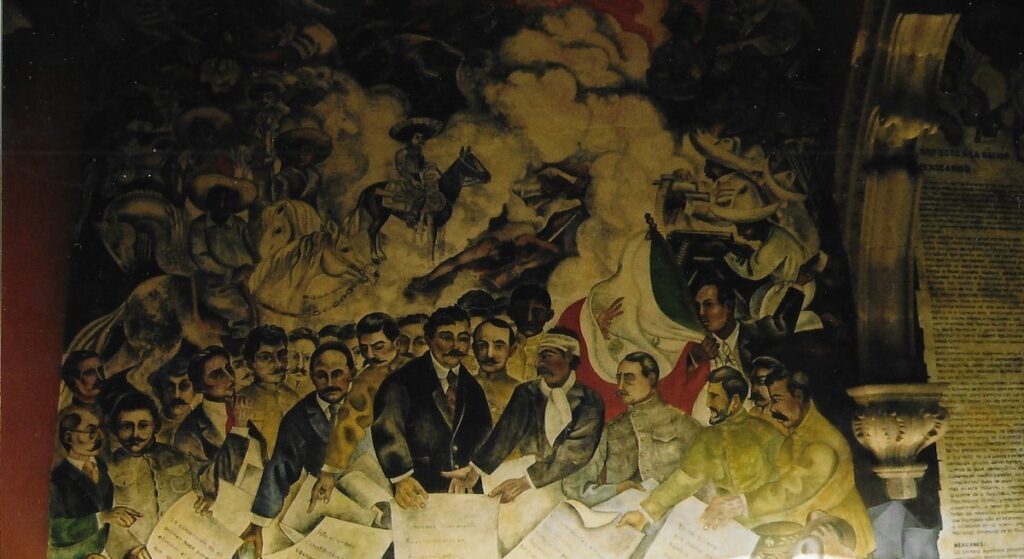
The four walls that surrounded the court yard were about fifty foot wide and every square inch of them were covered by murals containing hundreds of micro-scenes relating to local and national history, over a four hundred year period. I wandered over to the far wall and stood transfixed, absorbing the pastel like colours of the drawings and the stories they told. However, my camera was back at the hotel. I cursed my luck.
Nowadays the palace provides offices for senior local government officials. Not a bad place to have your office. However, all those pillars and arches felt like they were a secondary feature compared to the rich display of murals that adorned the walls on both floors of this building.
I had already been initiated into the colourful and evocative world of Mexican murals in Guadalajara, but in retrospect, this had merely been a taster for the lavish pictures that were painted on the walls in front of me.
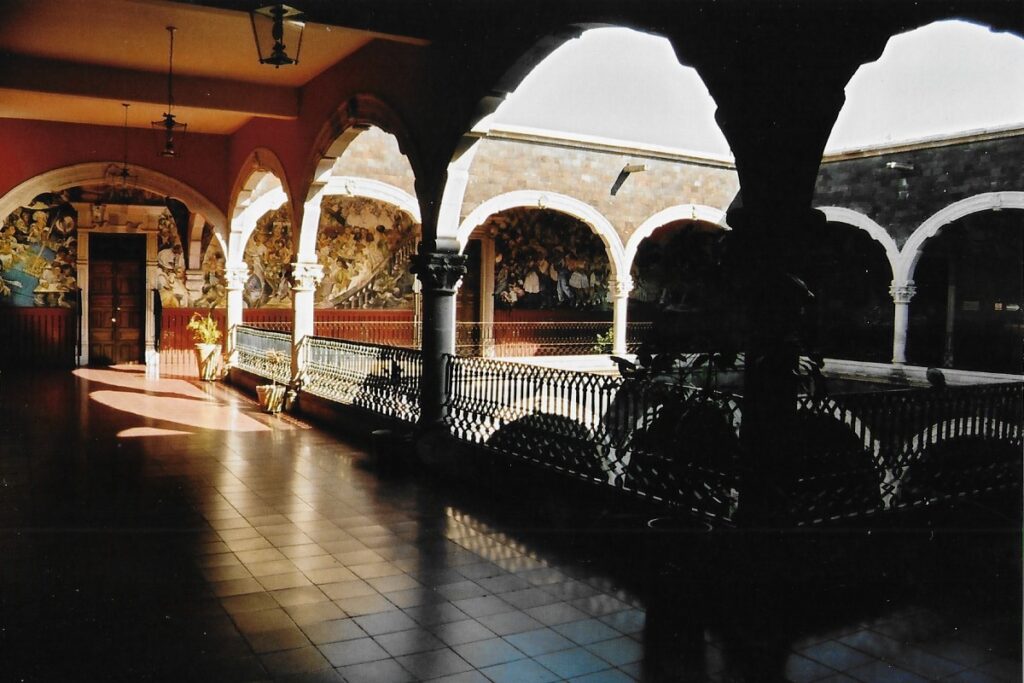
The art was the work of Chilean born Osvaldo Barra, a prodigy of the guru of Mexican mural painting, Diego Rivera – Rivera who in the 1920s had turned into an art form the painting of large frescoes concerning the history and social problems of Mexico. The walls of public buildings were his canvas. He passed his wizdom onto Barra, who by all accounts, from what I could see, had done him proud.
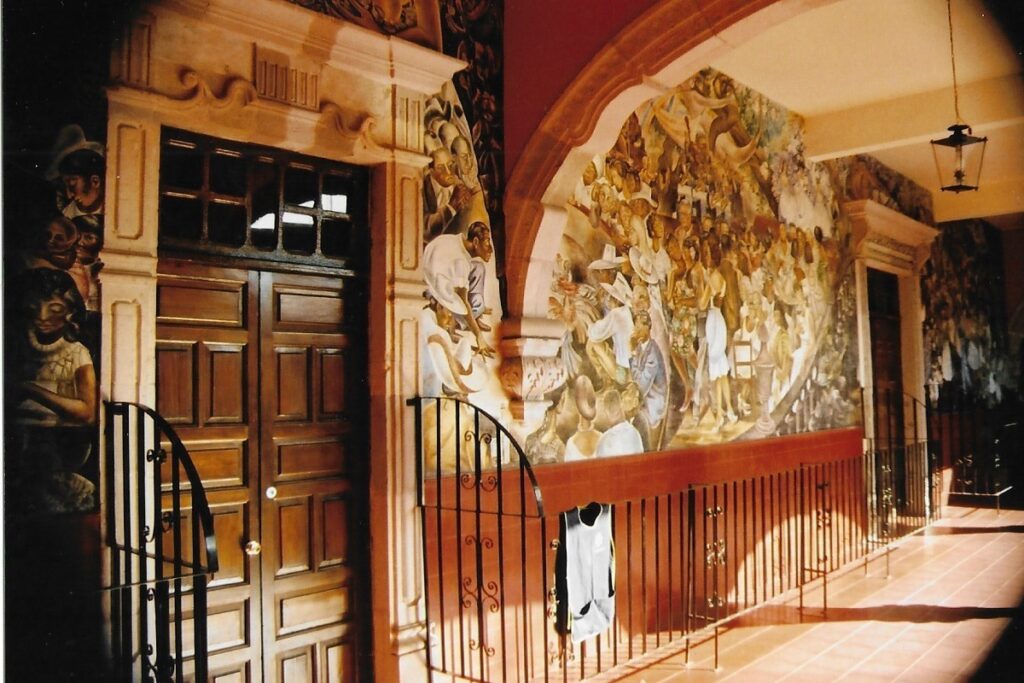
I had been stood in front of this expanse for half an hour, sauntering up and down. The sound of a gentle cough brought me back down to earth. I turned around. It was the gate keeper, who indicated that it really was time for him to go home. I stepped back over the threshold and he closed the doors behind me. The lights went out. I vowed to return the next day, with camera, even if it meant having to spend an extra night in this textile town.
And so the next evening, once again I stood in front of this riot of scenes. Trying to figure out Mexican history can be confusing at the best of times, with its many twists and turns. It’s like a patchy quilt work that defies coherence. But it certainly comes alive in a very colourful manner within this courtyard. Yes, studying Mexico’s past through the medium of paint rather than the printed text is much more fun.
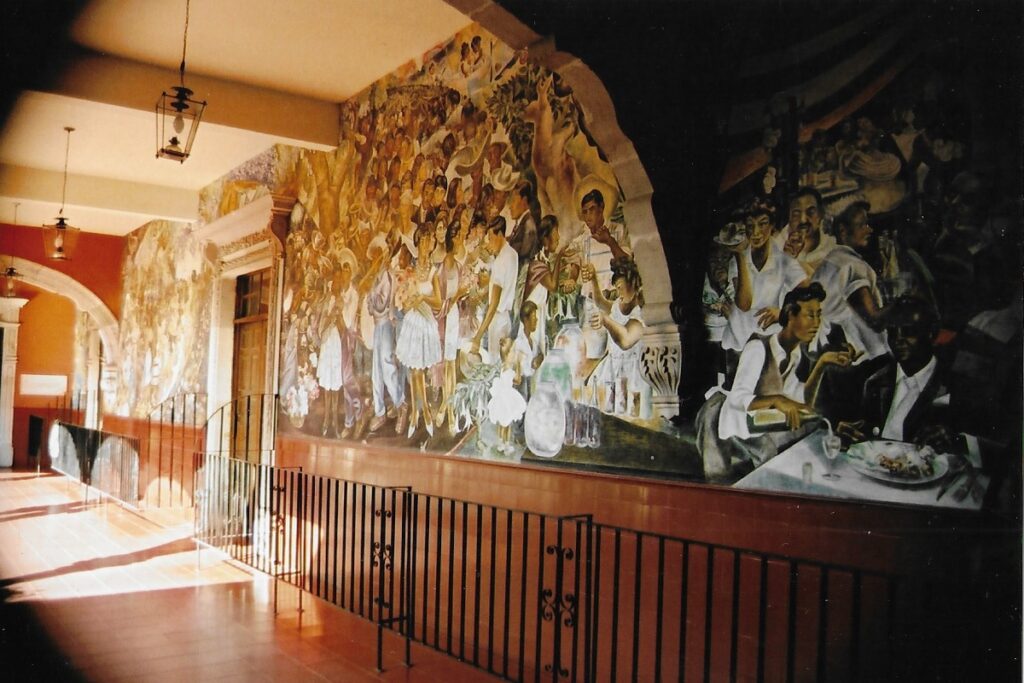
And so forgive me for a moment, while I indulge with an ad-hoc selection:
Images of the region’s early Indian settlers, the Chichimecas;
Harvesting of guavas and chilli peppers;
The brutality of the Conquistadors;
key scenes from the obtaining of state independence from Zacactecas in 1857;
The manifesto of the 19th century Aguascalientes Revolutionary Convention;
Various revolutions from the last century and a half;
The arrival of the train a hundred years ago in Aguascalientes;
The forming of consolidated copper companies;
Scenes from the Diaz dictatorship at the start of the twentieth century, like the General Strike, the destruction of schools and gagged citizens conveying the absence of freedom of speech;
Portraits of prominent professors, poets, painters, musicians, architects, politicians, composers and bullfighters;
Cockfighting arenas;
The signing of treaties;
More constitutional and reform documents;
The selling from the USA of weapons to revolutionary groups that have helped overturn unfavourable regimes;
A blood covered dagger being drawn across the length of a map of Mexico;
Images of avarice – blood-dripping hands clenching fistfuls of money;
The toil and plight of agricultural workers;
The construction of the nearby dam;
Portraits of local neighbourhoods;
And of course, to bring us up to more modern times, knitting and embroidery industries.
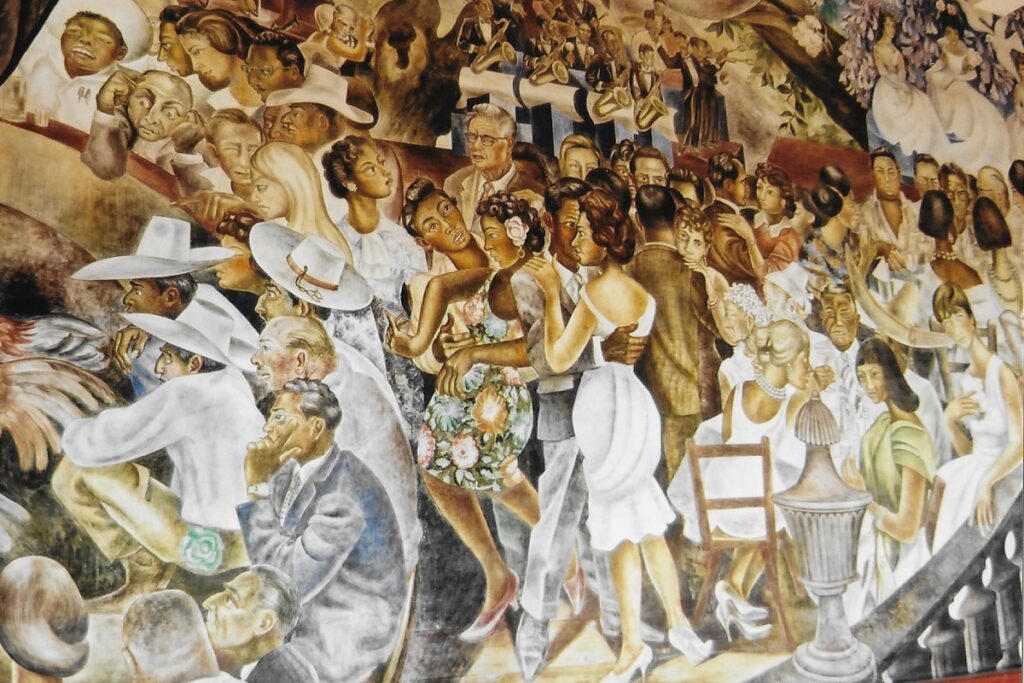
Whole swathes of these walls conveyed periods of great struggle at a local or national level. It was like a lament. I was reminded of Paul Theroux’s 1978 travel book about Latin America, The Old Patagonia Express. He refers to the manner in which Mexican museums take great pride in portraying the country’s long record of invasions and local military defeats, as a most Mexican enthusiasm – humiliation at history. In Mexico, he observed, a hero is nearly always a corpse.
As if to counter this, just before I left the Palace, on a wall near the exit there were also scenes of much merrymaking and tranquility: salsa bands and dancing; representations of a utopian society, where bare breasted women horse riders galloped around a stone age landscape, whilst men sit around fires drinking and eating, unfettered by the tigers that stood beside them.
Oh to be a local government official with an office in this place. On a rainy lunchtime you would not be stuck for something to do. Just pick a wall, maybe narrow it down to a zone of three feet wide and absorb and interpret the riot of scenes within.
