Viva la Revolucian!
Morelia was, according to the tourist literature, a vibrant city with a large student population. I expected to be woken up bright and early by traffic passing my window, which was just above street level. But instead I lay awake between 8 am and 10 am, straining my ears to listen to the sound of any vehicle passing. Instead there was just silence.
I got dressed and made my way down to the reception to pay for another night’s accommodation. On the counter was a TV which transmitted live pictures of a monumentous gathering in Mexico city’s Mayor Plaza square. I thought back to a travel agent’s comments two days ago – ‘November twentieth (todays date) is a big public holiday throughout Mexico. It’s Revolution Day.’
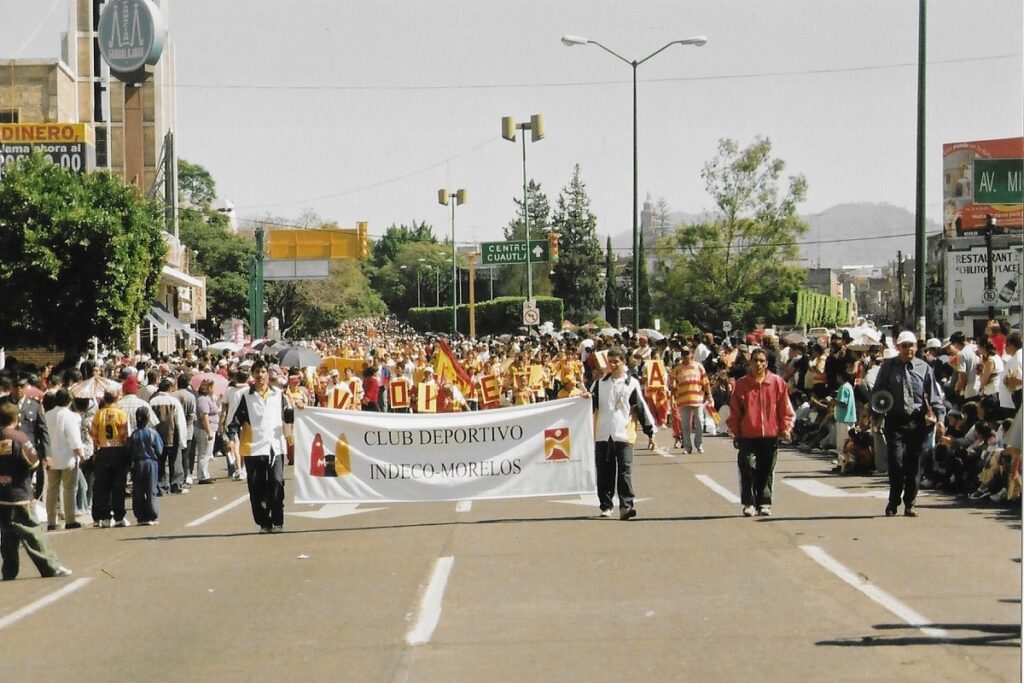
I stepped out on the street wishing for a moment that I had stayed on in the Capital, to witness these proceedings, but soon realised that I was not going to be totally deprived. The reason for the lack of traffic was that the surrounding streets had been sealed off to enable the flow of the distant carnival. I made my way up to Avenue Mader-Poiente, following the sounds of many whistles being blown. The barricades were up on either side of the road, thousands of people stood behind these railings, watching the entertainment, which had been moving along the street for the last hour.
Across from where I stood was the town hall. Over its balcony was draped a long Mexican flag and behind this, looking down onto the parade were a group of twelve dignitaries, their right hands held up in salute to the participants below. In the middle stood the Mayor with a heavy golden chain of office around his neck.
So this was Revolution Day. I suppose if I was in the former USSR, tanks and all manner of displays of weaponry would have trundled past in a Mayday display of might. But this was more a carnival, than a rally. The banner stretched across one of the first floats to edge its way past me read ‘Viva La Revolucion’. But any aggressiveness stopped there. On the back of the lorry sat a group of infants in school uniform. They clasped large clusters of green, red and white balloons – the colors that make up the Mexican flag.
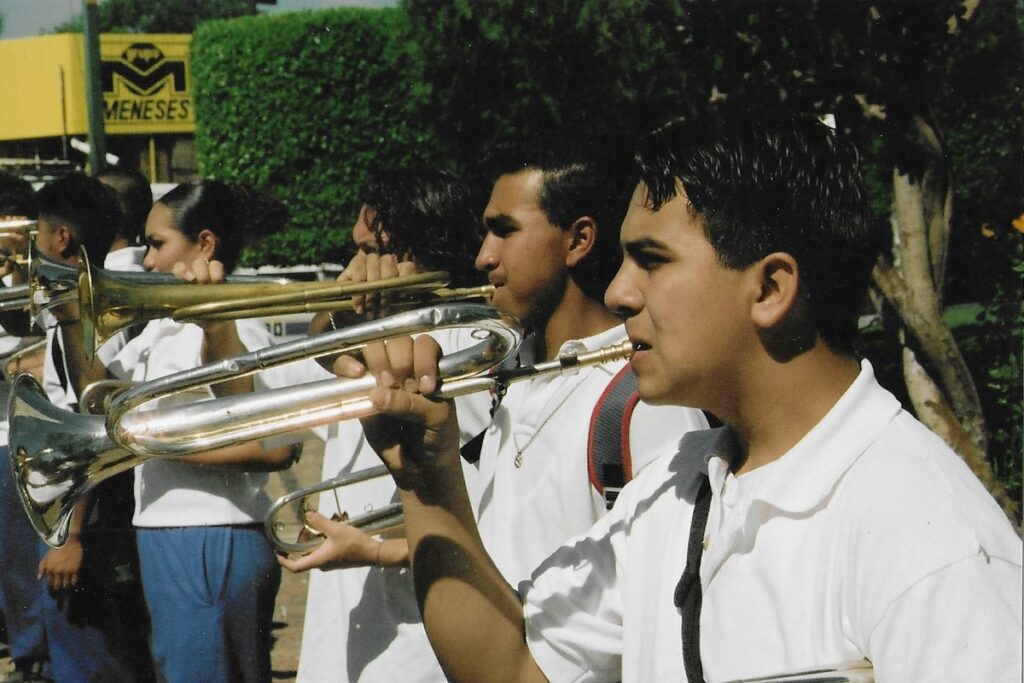
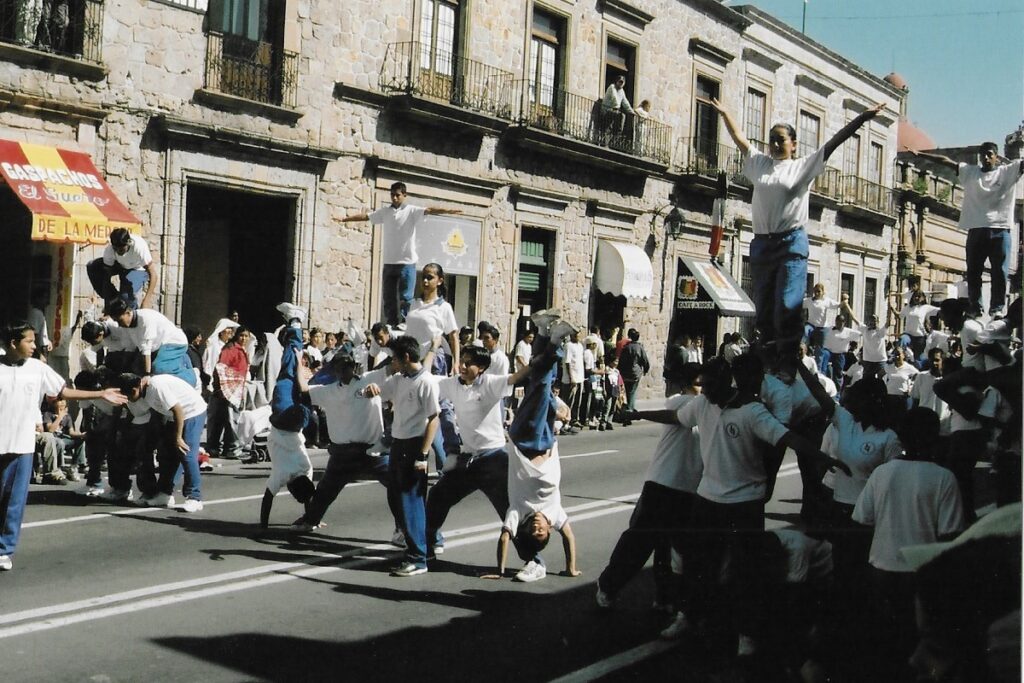
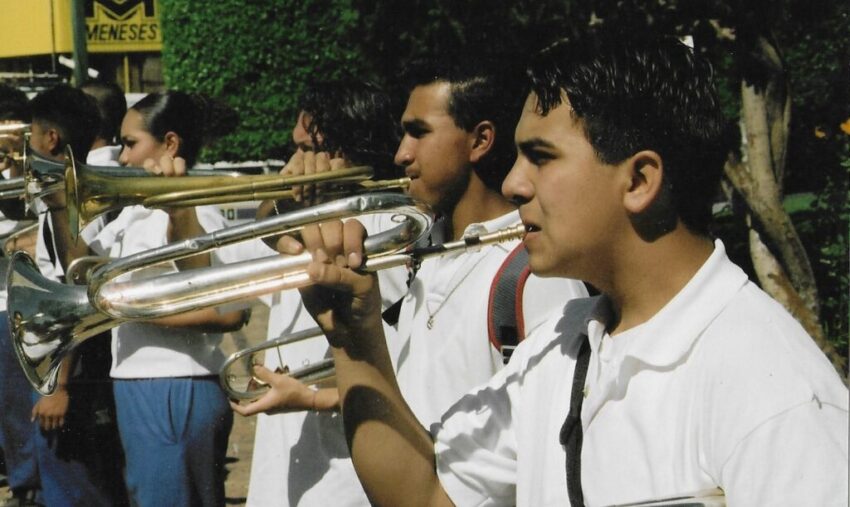
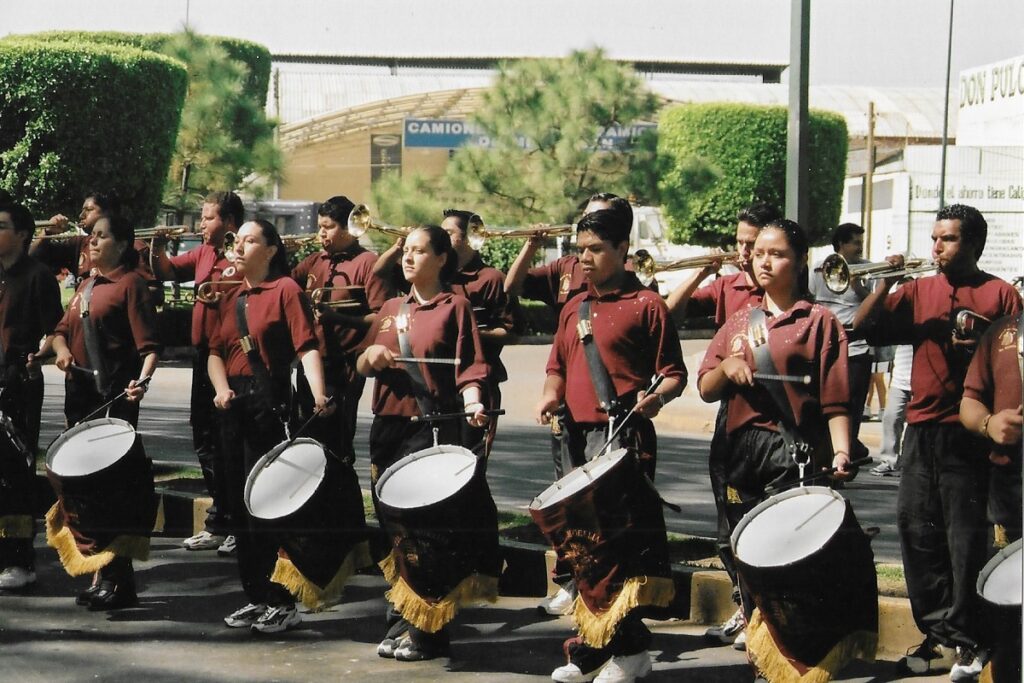
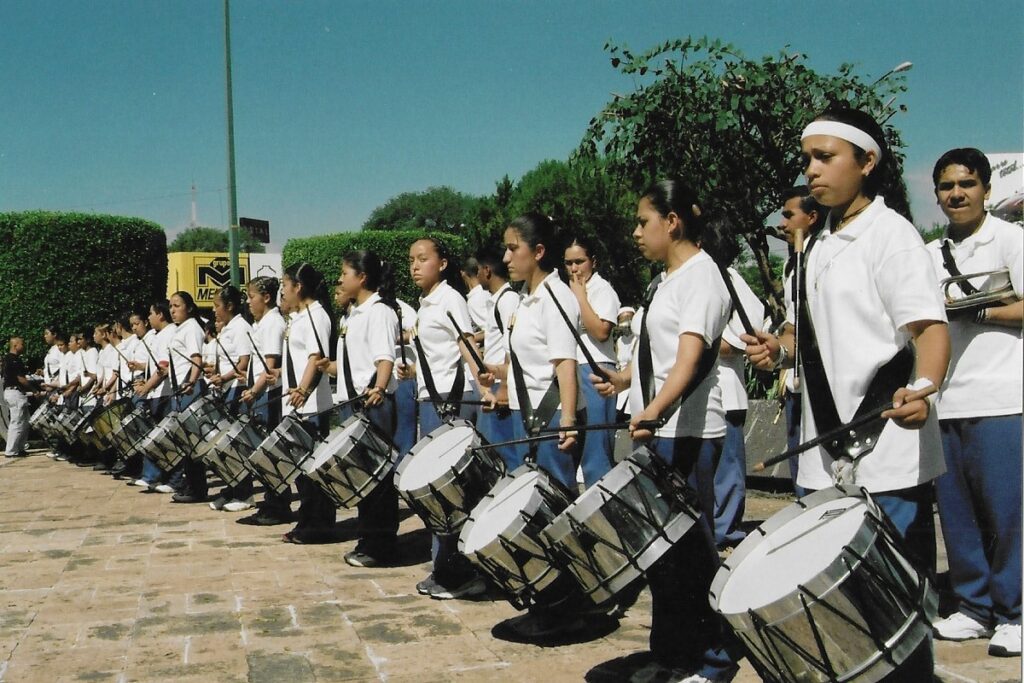
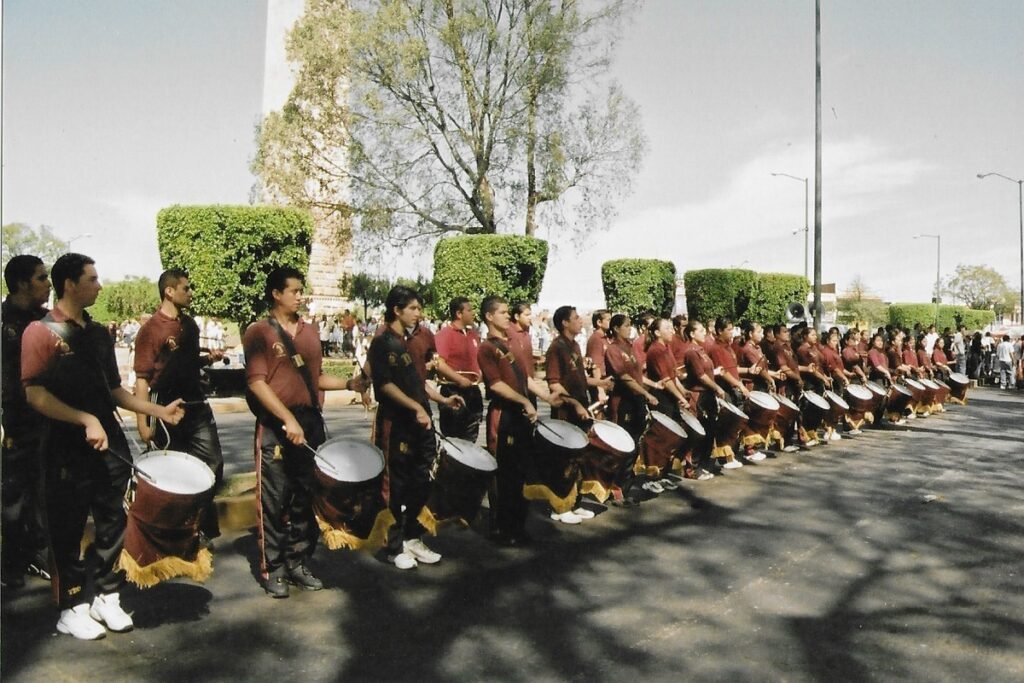
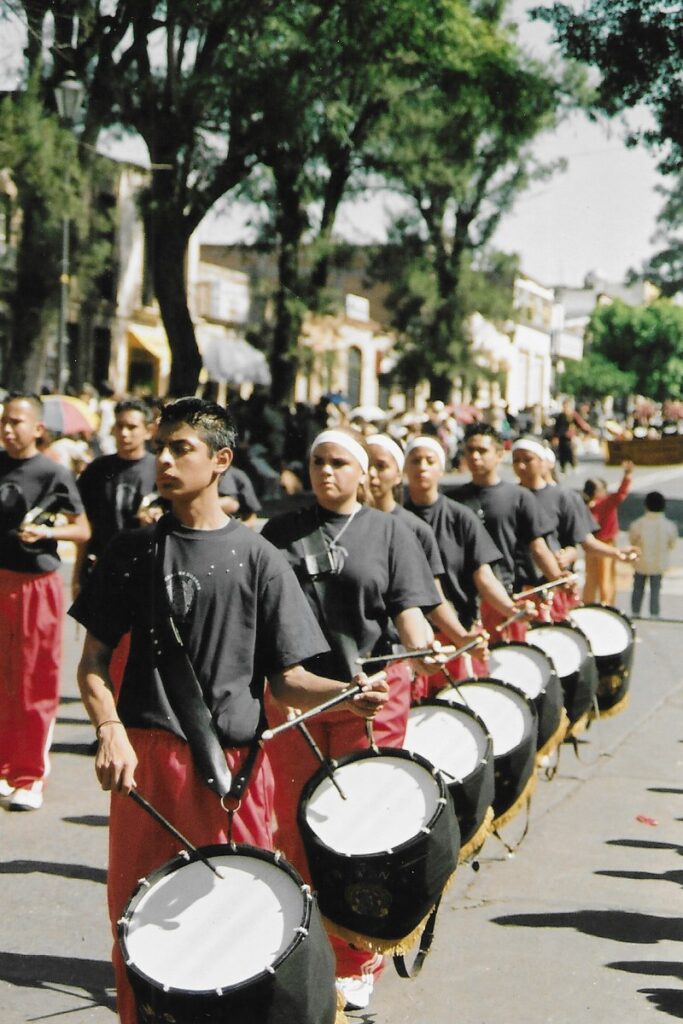
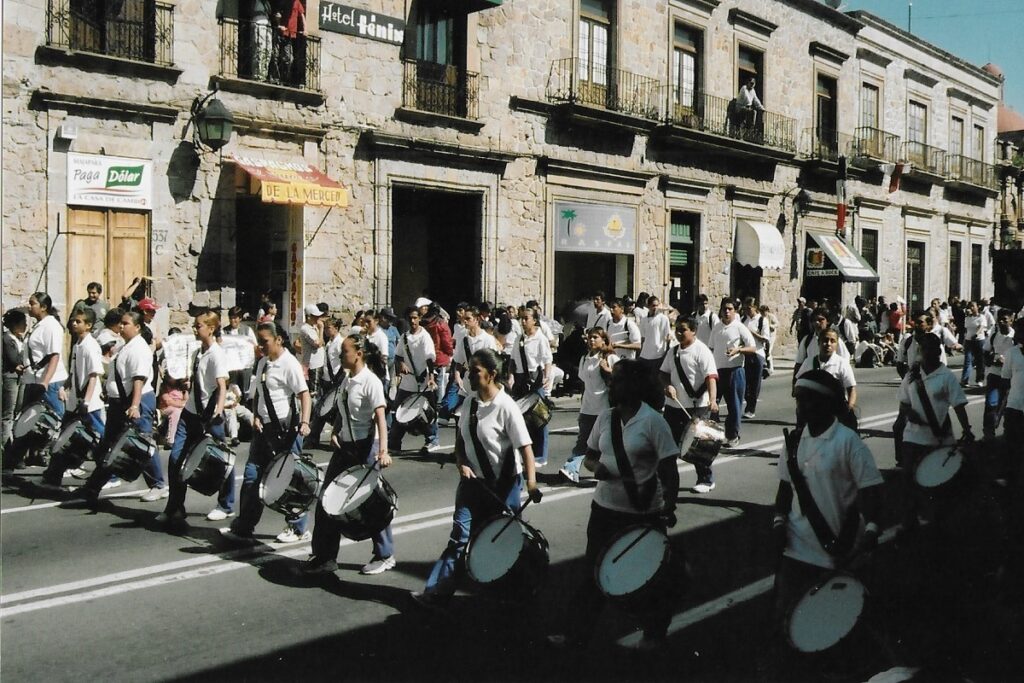
Behind this vehicle walked thirty drummers. At intervals they would break into the choreographed movement that I had seen enacted down the side of the Cathedral the previous night. The drummers were followed by bugle players from another local society. In fact far from any jingoistic commemoration of the Revolution – (which Mexican revolution would have been difficult to define. There have been so many). The morning’s events constituted a massive coming together of a diverse range of community groups. Not just a procession representing all their separate interests, but an effort to integrate them as well. And so behind the bugle players were the gymnasts, who formed a three-tier pyramid. The second tier of them stood on the shoulders of the first. And then at the apex, forming the third tier were balanced two bugle players, who had been borrowed from the legion in front.
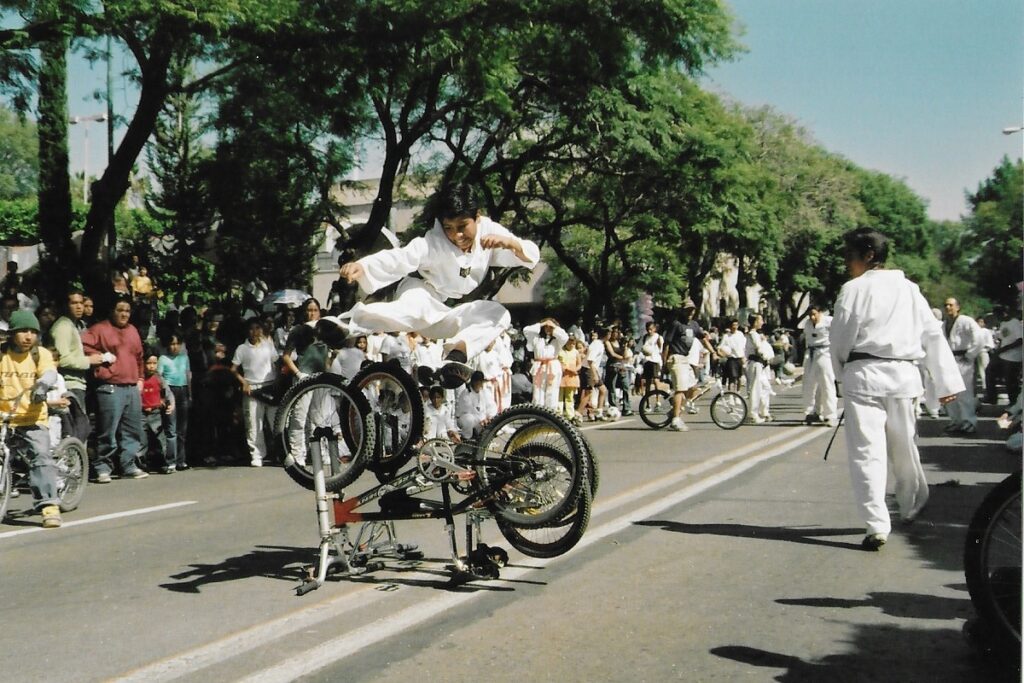
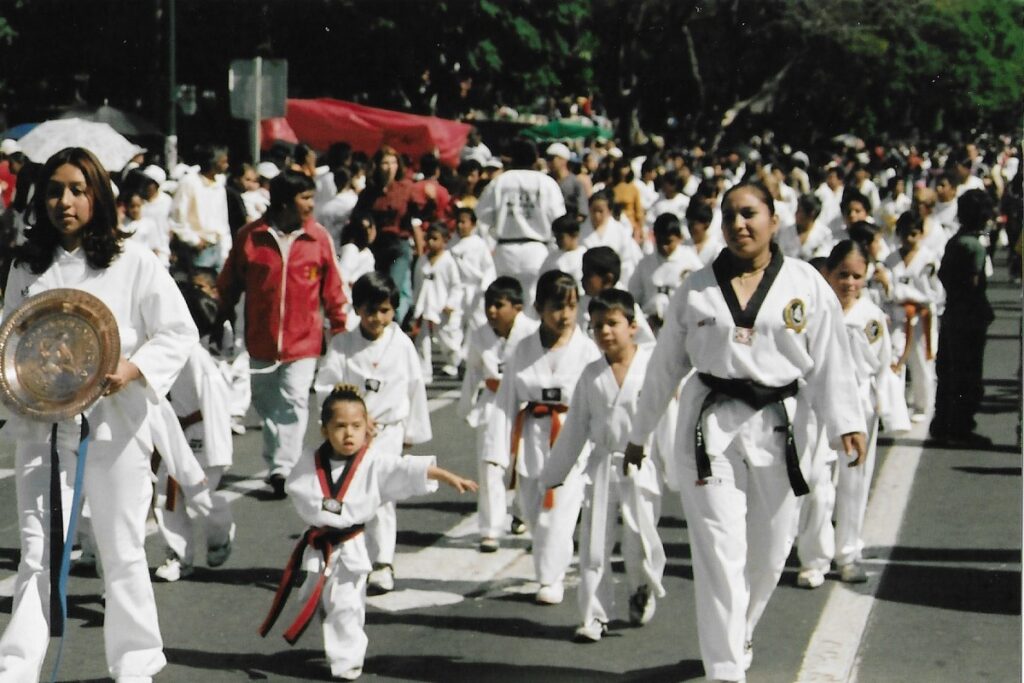
Local cycling clubs crawled past, just about retaining their balance on two wheels. But then another example of a seamless transition between the community groups on display. Behind the cyclists were several judo clubs. Three of the cyclists dismounted. And posited the bicycles sideways and parallel to each other. Members of the judo club then took it in turn to perform stretching vaults over the bicycles.
I pushed myself to the back of the crowd, away from the railings and edged down the street in front of the doorways of houses. On the forecourts of these houses, residents had set up impromptu burger and drinks stalls; possibly the only time of the year when people queued up at their front door.
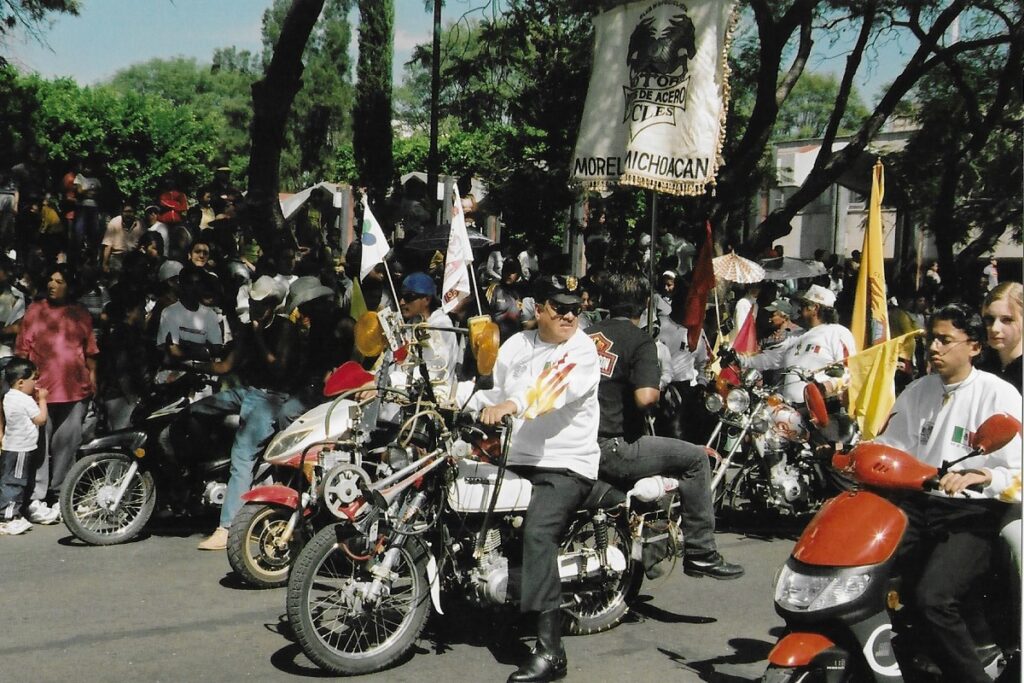
By the time I had resumed my position, cycle power was replaced by the sounds of throbbing engines as a series of powerful motor bikes rolled down the road, but only at walking pace mind you. Harley Davidsons; customised motorcycles with handlebars that sprouted up in the air, cycles with two foot wide tyres, all covered in pendants and flags; and of course riders in black leather jackets, trousers, shades and caps.
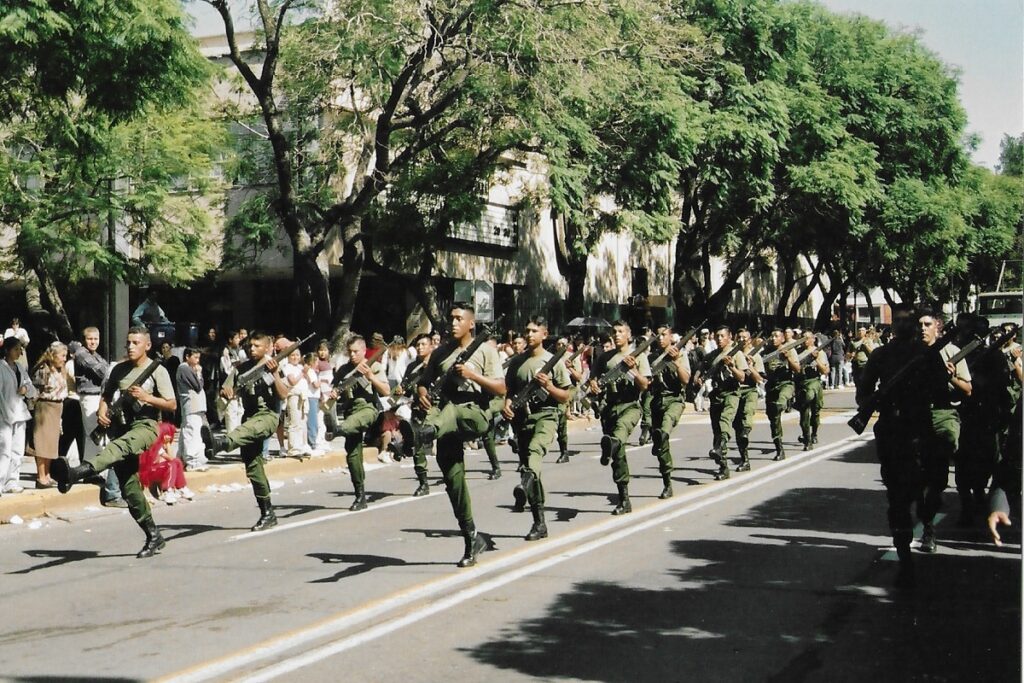
But then my earlier vision of a revolution celebrated with a pacifist zeal started to recede. A matter of paces behind the men on their Harleys, I clamped eyes on the next participants in the procession – the military had appeared on the scene. Goose stepping, machine gun gripping, jack booted khaki uniforms stomped their way down the Avenue Mader-Poiente, I longed for the Harleys to do to the military, what the cyclists had done to the judo players – line up a few of their motor bikes to see if the soldiers were really as athletic as their goose stepping made out.
I made my way down to the bottom end of Avenue Mader-Poiente. Down several side streets were the drumming clubs. They stood in line and carried on drumming. I watched one crew for fifteen minutes, until their Master of Ceremonies shouted, ‘Drummers dismissed’ or something like that. They all turned to their right, stamped their feet once, and then made their way to a large MexDonalds (as it was called), in the next street.